
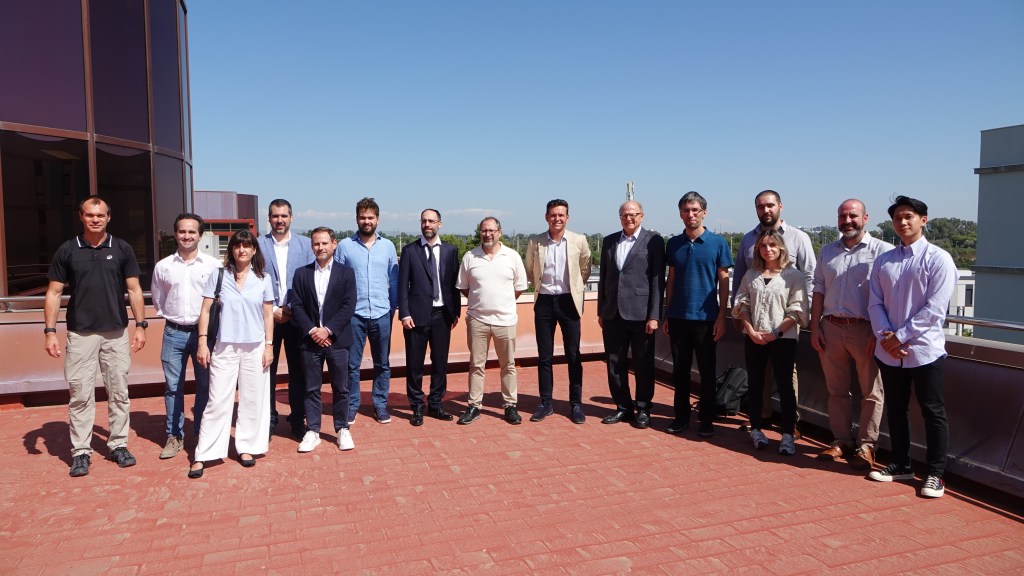
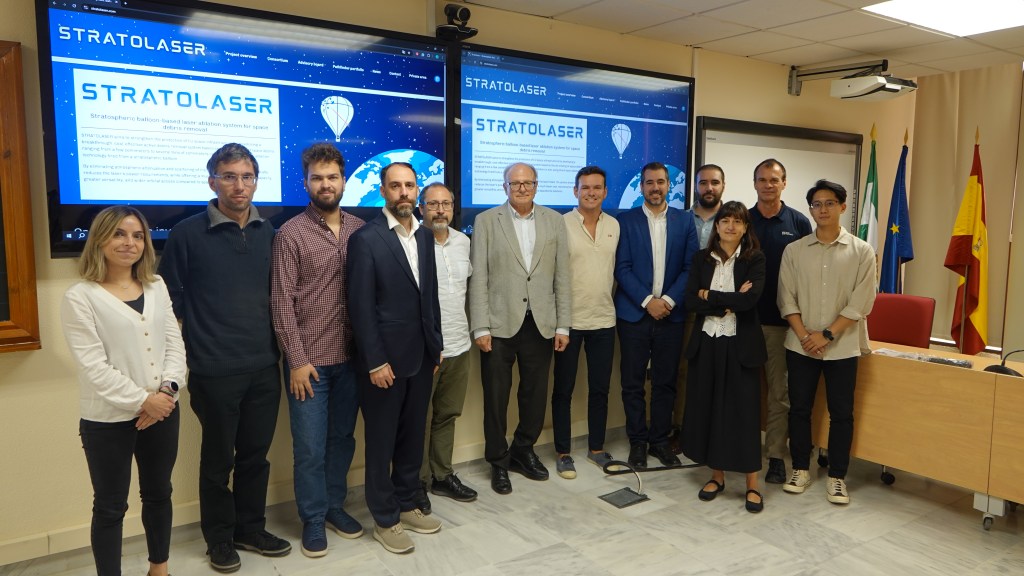
STRATOLASER, the international project led by AICIA’s GRVC Robotics Lab and partnered by professionals from B2Space, Fraunhofer FHR, the HiLASE centre, CLPU and Sapienza University, has kicked off during a meeting held in the Seville on october 2nd and 3rd. Over the next 36 months, this initiative will develop an innovative way to remove space debris using a laser sent via a stratospheric balloon
The STRATOLASER project (Stratospheric balloon-based laser ablation system for space debris removal) has begun its first steps during the kick-off meeting that the partners of this initiative held on october 2nd and 3rd in Seville, Spain. The members of this international consortium, B2Space, Fraunhofer FHR, the HiLASE centre, the Spanish Centre for Pulsed Lasers (CLPU), Sapienza University of Rome and the project leader, AICIA’s GRVC Robotics Lab, have already begun to work on this project whose objective is developing a breakthrough, cost-effective active debris removal system based on the de-orbiting of space debris ranging from a few centimeters to several tens of centimeters in size, using direct laser ablation technology fired from a stratospheric balloon.
As part of EIC Pathfinder, a funding programme under Horizon Europe by the European Comission, STRATOLASER aims to strengthen the protection of EU space infrastructure. In response to the growing problem of space debris, with more than 2,500 non-operational satellites, 36,500 pieces bigger than 10 cm. and 1 million between 1-10 cm. in Earth’s orbits, STRATOLASER proposes a system capable of decelerating these objects to ensure they don’t threaten satellites and other active technology. To achieve this mission, each partner will contribute with their professional expertise; the GRVC Robotics Lab is the leader of this project, B2Space provides the balloon platforms and system design expertise, Fraunhofer FHR contributes with radar techniques for on-board tracking, HiLASE Centre’s with its background in high-power system design and laser ablation, the Spanish Centre for Pulsed Lasers (CLPU) is the responsible for optoelectronics and ultrashort pulse development and Sapienza University of Rome is in charge of orbital mechanics and monitor mission analysis.
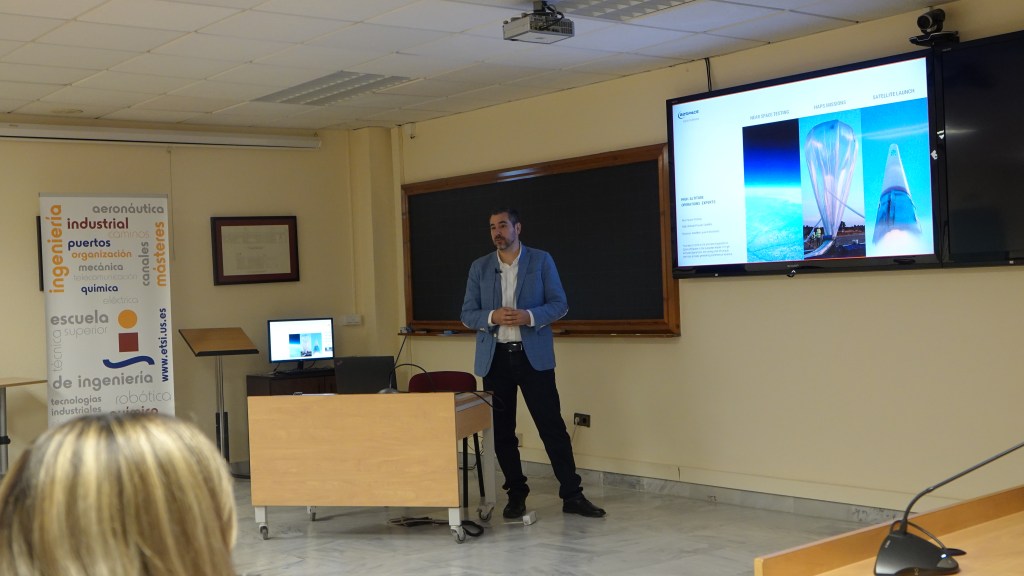
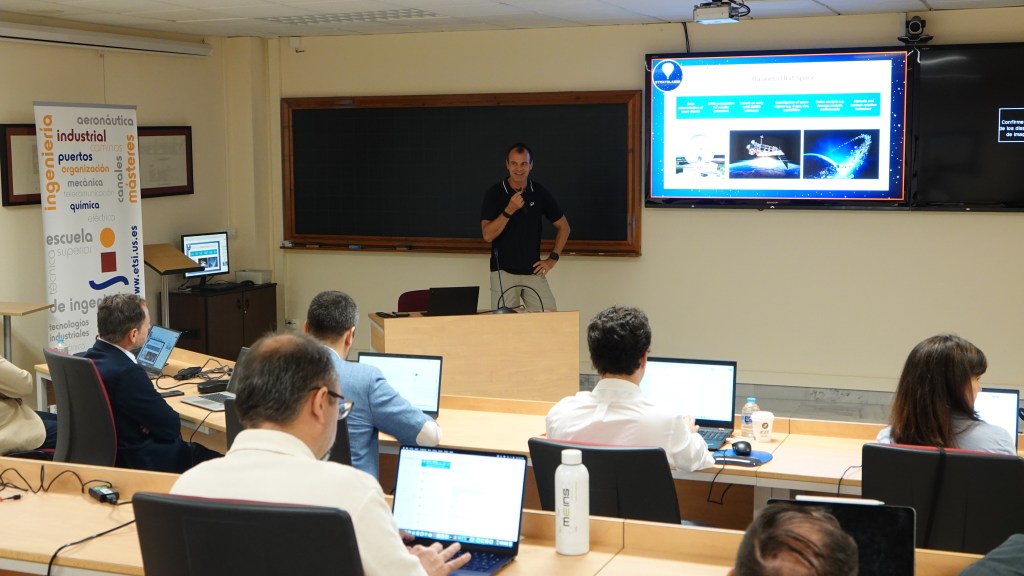
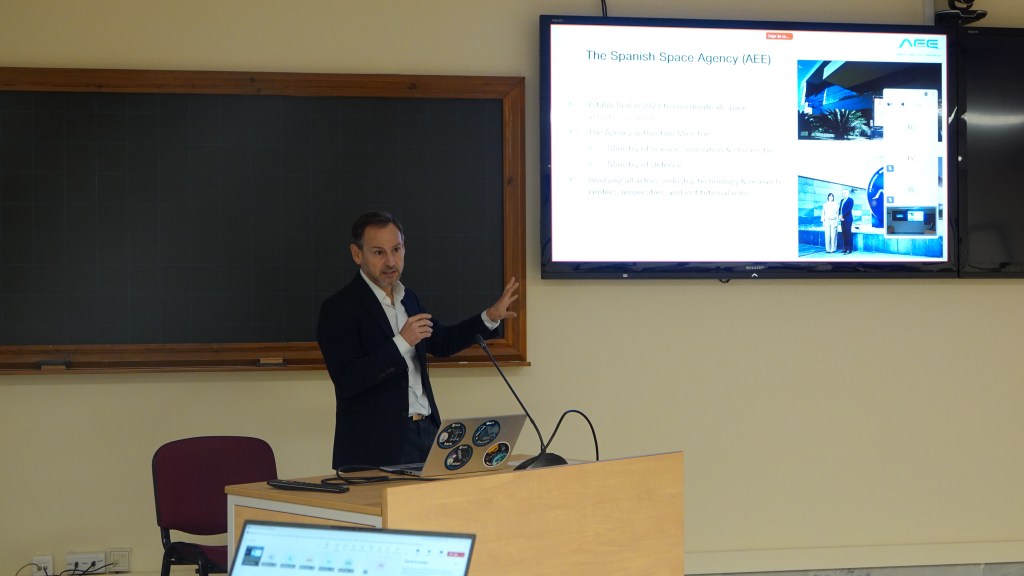
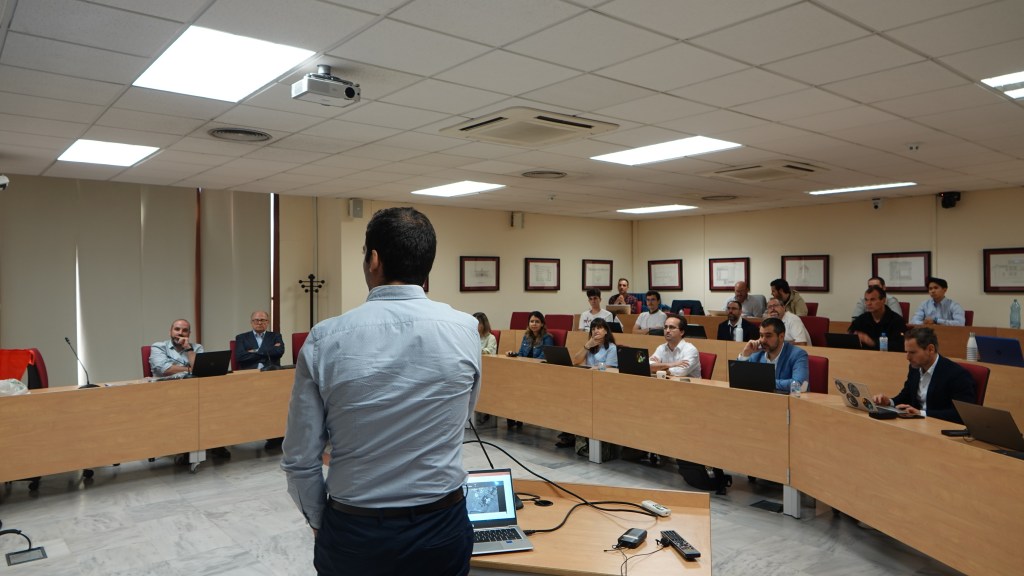
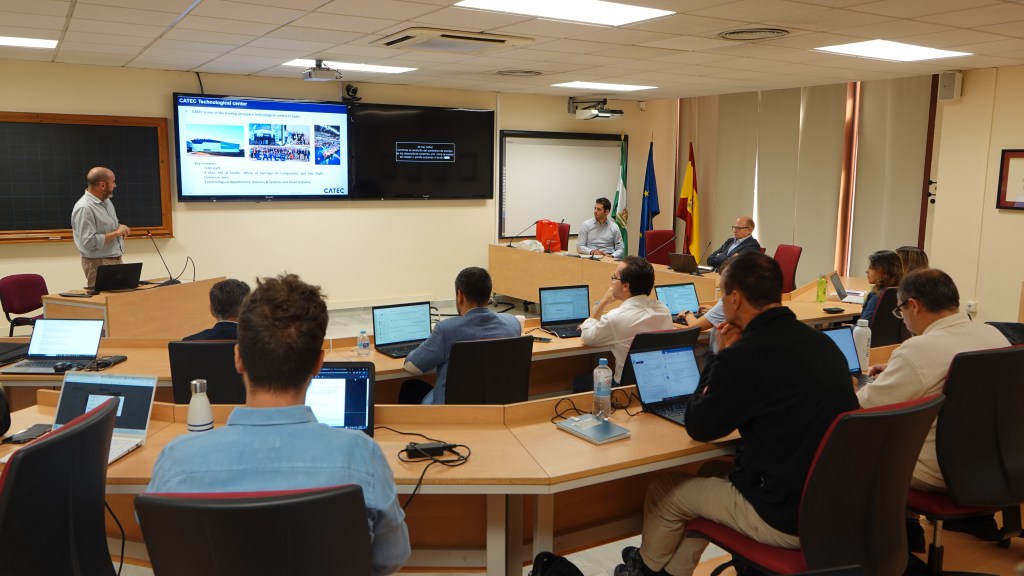
At the kick-off meeting, held at the Escuela Técnica Superior de Ingeniería of the University of Seville, the partners discussed key aspects such as radar tracking and integration, stratospheric balloon campaigns and their demonstrations, high-power lasers for ablation, aerospace actors and platform design, among others. The event marked the official launch of STRATOLASER, which is expected to have a 36 month duration
Gallery of the event



 Stratolaser